
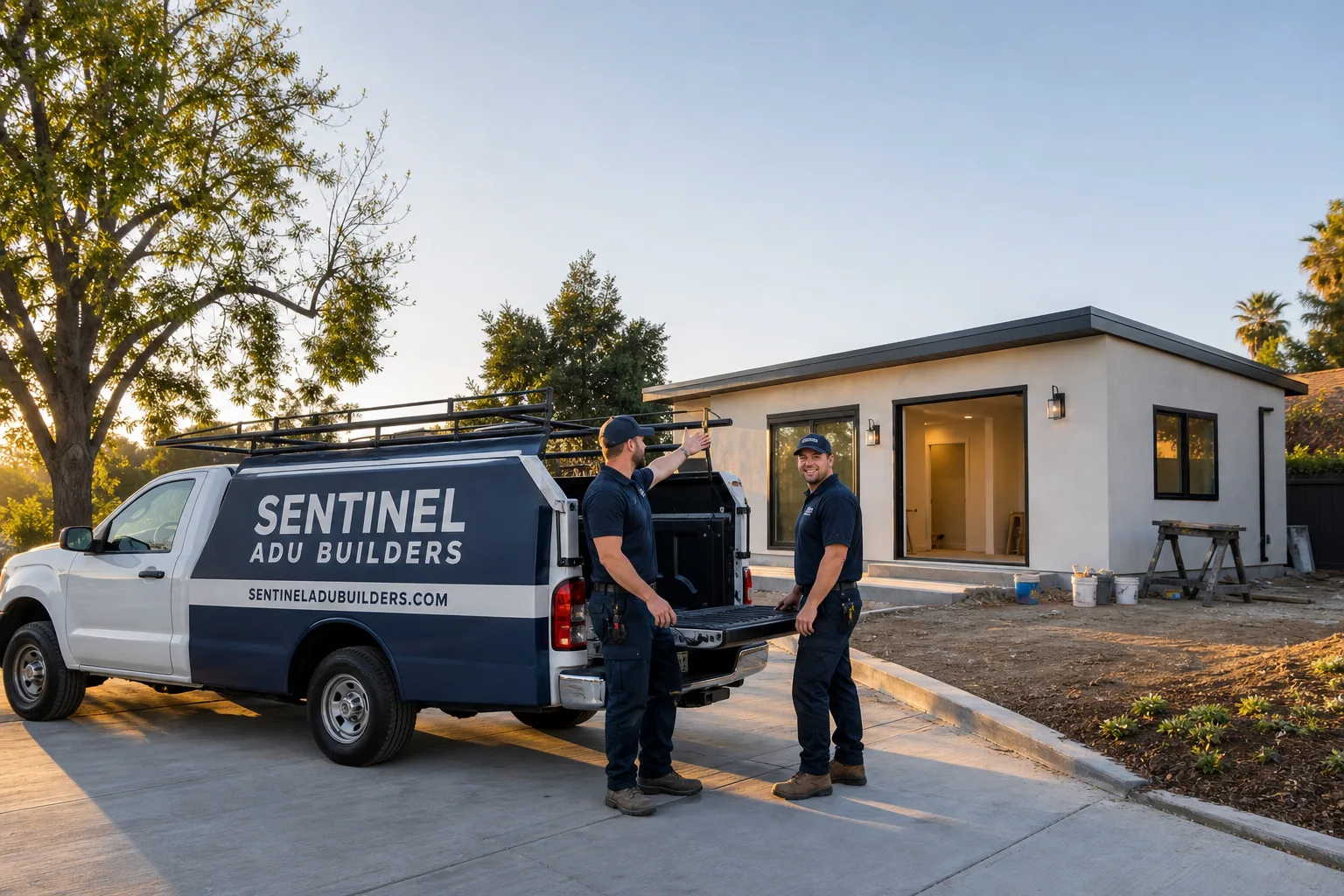
Fast, Reliable ADU Builders Across Desert Hot Springs
Adding an accessory dwelling unit in Desert Hot Springs means building in one of the Coachella Valley’s windiest corridors, where the San Gorgonio Pass channels Santa Ana gusts hard enough to tear off an underbuilt roof. A detached ADU here typically runs $180,000 to $380,000 depending on size, finish level, and whether you go prefab or site-built. We’ve built in the 92240 and 92241 ZIP codes long enough to know exactly what the city’s inspectors look for on wind-load and foundation details. Call Noel Ibarra’s team at Sentinel ADU Builders at (855) 341-3461 for a free estimate and an honest take on what your lot actually needs.
Why Sentinel ADU Builders Is Desert Hot Springs’s Preferred ADU Builders Company
We earn trust in Desert Hot Springs by knowing the local code book chapter and verse. The city allows detached units up to 1,200 square feet, which is generous compared to most California municipalities. But that permissiveness comes with scrutiny: inspectors here check hurricane tie spacing, wind-rated shingle documentation, and soil compaction reports with an eye trained by decades of wind damage claims. We prepare for that. Our clients in Desert Hot Springs tell us the difference comes down to paperwork and preparation. When we pull permits, we attach the engineering letters and product data sheets before the inspector ever asks. That’s why homeowners here keep our number.
Noel Ibarra runs every Desert Hot Springs project with the same principle: we stay on the job from permit to punch-list. No handoff to a subcontractor who disappears. When the city schedules a wind-load inspection, we’re there with the documentation in hand. That level of oversight is what the Sentinel name means to us. It’s not a marketing slogan. It’s the actual job.
ADU Design in Desert Hot Springs
ADU Design in Desert Hot Springs starts with the wind, not the floor plan. A unit that would sail through plan check in Palm Springs can fail here if the roof-to-wall connections aren’t specified for the San Gorgonio Pass wind zone. We design every Desert Hot Springs ADU with the same baseline: hurricane ties on every rafter or truss connection, wind-rated shingles (typically Class F or better), and a foundation plan that accounts for the sandy, expansive soils common across the city. A typical design package for a detached ADU in Desert Hot Springs runs $4,000 to $9,000, and it should include structural calculations, not just pretty renderings. Call (855) 341-3461 to talk through what your lot requires.
Structural Engineering for Wind Zones
Desert Hot Springs sits on the western edge of the Coachella Valley, where afternoon winds through the San Gorgonio Pass regularly exceed 50 mph. The city enforces wind-load requirements that generic ADU plans often miss. We work with local structural engineers who know exactly what the building department expects and document every tie, anchor, and strap.
Permit-Ready Documentation
A cheap design package gets rejected at the counter. Ours includes the engineering stamps, product approvals for wind-rated materials, and soil report integration the city requires before it will even look at your plans. Most homeowners don’t realize that a rejected permit set can add three to six weeks to the timeline. We’d rather get it right the first pass.
Backyard ADU in Desert Hot Springs
A Backyard ADU in Desert Hot Springs is one of the strongest equity plays a homeowner can make here, but only if the build is done to local standards. Most homes are single-story stucco builds from the 1980s through the 2000s on lots large enough for a 600 to 1,200 square foot detached unit. The catch is the soil. Many lots in the 92240 area have sandy, permeable ground that drains fast but shifts under standard slab designs. A typical detached backyard ADU in Desert Hot Springs runs $190,000 to $360,000 fully built out, with site-specific foundation work accounting for $8,000 to $18,000 of that. You can call (855) 341-3461 for a written line-item quote, free.
Foundations Built for Sandy Soils
We don’t pour a standard slab and hope. Every Desert Hot Springs build starts with a soil report, and when the report shows expansive or loose material, we specify pier-and-grade-beam or thickened-edge foundations that move with the ground instead of cracking against it. This is the single biggest difference between a 20-year ADU and a unit that shows slab cracks in five.
James Hardie Exteriors That Hold Up
On applicable builds, we specify James Hardie fiber cement siding. It’s rated for high winds, resists fire, and stands up to the relentless Coachella Valley sun better than vinyl or cheap stucco patches. When we built a detached ADU in the 92240 ZIP code on a lot with sandy, permeable soil, we paired a site-specific foundation with Hardie siding and hurricane ties on every rafter. The unit passed the city’s wind-load inspection on the first try. The homeowner told us later their insurance premium dropped after we handed over the compliance documentation. That’s what a Desert Hot Springs build should look like.
Trusted Brands We Service in Desert Hot Springs
We’re a brand-agnostic ADU Builders team, which means we don’t push one prefab product and pretend it fits every lot. We work across leading platforms including Abodu, Cover, and Dvele, and we also build site-built units when the lot, budget, or design calls for it. For Desert Hot Springs, we pay close attention to which manufacturers offer wind-rated roof assemblies and fiber cement siding options out of the factory. If a prefab panel won’t pass the city’s wind-load inspection, we’ll tell you before you spend a dollar on it. That’s the whole point of an advisory model: the right unit for your lot, your budget, and your timeline, not the one with the best margin for us.
Common ADU Builders Problems We See in Desert Hot Springs Homes
- Roofs that skip hurricane ties. We get called after the fact far too often. A contractor used standard framing clips instead of rated hurricane ties, and the first strong Santa Ana event loosened the roof decking. By the time the homeowner notices, the damage is done and the fix costs more than doing it right originally.
- Standard shingles that fail inspection. Desert Hot Springs requires wind-rated shingles in most residential zones. A roofer who’s used to calmer cities will install Class A standard shingles, and the city will red-tag the permit. Swapping shingles after installation is expensive and avoidable.
- Slabs poured without a soil report. The sandy, permeable soil across the 92240 and 92241 ZIP codes doesn’t behave like the hardpan in other parts of the valley. A generic slab will heave and crack within a few seasons. Foundation repairs on an occupied ADU can run $15,000 to $40,000 and require relocating tenants.
- Patio covers and shade structures that aren’t anchored. The afternoon wind through the San Gorgonio Pass doesn’t just test roofs; it tests anything with uplift. Unanchored patio covers become projectiles. We anchor every structure to the foundation or ground with rated hardware.
Pricing for ADU Builders in Desert Hot Springs, CA
A detached ADU in Desert Hot Springs typically runs $180,000 to $380,000 all-in, depending on square footage, finish level, and whether you choose prefab or site-built. Studio units in the 400 to 500 square foot range generally land between $180,000 and $230,000. A 1,000 to 1,200 square foot two-bedroom unit can reach $320,000 to $380,000 with mid-grade finishes. The variables that move cost most in this city are foundation scope, wind-rated roofing upgrades, and utility trenching distances from the main house to the unit. We give written line-item quotes, so you see exactly where the money goes before we ever start. Call (855) 341-3461 to schedule a free estimate. Our Desert Hot Springs clients tell us the clarity is the main reason they chose us.
We Also Serve Cities Near Desert Hot Springs
Sentinel ADU Builders works throughout the western Coachella Valley. We serve Desert Edge, Garnet, Palm Springs, and Morongo Valley with the same structural rigor we bring to Desert Hot Springs jobs. If you’re in a neighboring city and want to talk through ADU feasibility on your lot, call (855) 341-3461 and we’ll walk you through it.
Serving Desert Hot Springs, CA — Our Local Coverage Area
We’re based in the Desert Hot Springs area and know this community well. Use the map below to see our service coverage — if you’re nearby, we can almost certainly help.
FAQs About ADU Builders in Desert Hot Springs
Most residential ADUs in Desert Hot Springs need roof assemblies rated for wind gusts of 90 to 110 mph, depending on the exact location and exposure of your lot. The city enforces this through engineered calculations and on-site inspections of the actual roof-to-wall connections, not just the shingle rating. That means hurricane ties at specified spacing, wind-rated shingles with product documentation, and sometimes additional strapping at gable ends. If your ADU plans don’t include this engineering, plan check will reject them. Call (855) 341-3461 for a design package that already includes the wind-load work.
The sandy, permeable soil common across the 92240 and 92241 ZIP codes shifts as it expands and contracts with moisture and temperature, which means a standard slab can crack within a few years. We require a soil report on every Desert Hot Springs build and specify a foundation system matched to that report, typically pier-and-grade-beam or thickened-edge depending on the findings. This adds cost up front but prevents foundation repairs that can run $15,000 to $40,000 later. Get a free estimate at (855) 341-3461 and we’ll explain what your lot’s soil means for your budget.
You’ll need a building permit, a zoning clearance confirming your lot’s ADU eligibility, and depending on your location, grading or drainage permits if the site slopes or the soil report flags water runoff concerns. The city’s ADU ordinance allows detached units up to 1,200 square feet, which is more permissive than most California cities, but the tradeoff is closer scrutiny on structural details. We handle the entire permit package, including the engineering stamps and product approvals the city requires. Noel Ibarra stays on the job until the permit is finaled and the unit is approved for occupancy. Schedule a consult at (855) 341-3461.
Abodu, Dvele, and Cover all produce prefab units with structural specifications that can meet Desert Hot Springs wind-load requirements when installed correctly. The critical piece is the installation detailing: hurricane ties, anchor bolts, and roof-to-wall connections have to be installed per the manufacturer’s engineering and then verified by the city’s inspector. We’re familiar with the installation requirements for all three platforms, and we don’t sell prefab units directly. We build and install them, which means our recommendation is based on what works on your lot, not what we’re trying to move out of a warehouse. Call (855) 341-3461 to talk through your options.
Insurance carriers in Riverside County increasingly ask for documentation that a structure meets local wind-load requirements before they’ll write a full replacement-cost policy on an ADU. When we provide hurricane tie photos, wind-rated shingle product data, and the passed inspection record, homeowners typically see either a premium reduction or, at minimum, no surcharge for wind exposure. We built a detached unit in the 92240 ZIP code where the homeowner saw an actual premium drop after we handed over the compliance package. We document everything and give you the file at closeout. Call (855) 341-3461 for a free estimate and ask us about the documentation we provide on every Desert Hot Springs build.
Written by Noel Ibarra, Owner at Sentinel ADU Builders, serving Desert Hot Springs and the surrounding Coachella Valley.